Subterranean termites and drywood termites present distinct threats to Central Valley structures. In older commercial inventory across the Tower District, Downtown Fresno, and Chinatown along the 99 corridor, historic…
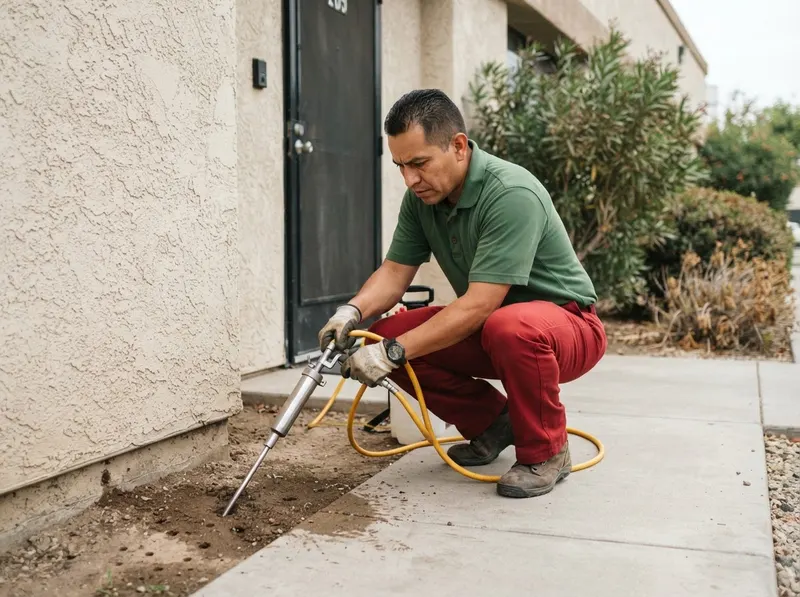
Subterranean termites and drywood termites present distinct threats to Central Valley structures. In older commercial inventory across the Tower District, Downtown Fresno, and Chinatown along the 99 corridor, historic heavy timber framing frequently encounters Western drywood termites nesting directly inside roof trusses, window casings, and structural load points. Modern slab-on-grade commercial developments in Woodward Park, Fort Washington, and logistics centers near Fresno Yosemite International Airport face pressure from Western subterranean termites. These ground-dwelling colonies enter through expansion joints, utility penetrations, and perimeter foundation hairline cracks, driven by agricultural irrigation cycles and the dry climate of Fresno County.
Effective commercial containment relies on localized problem resolution rather than disruptive operations or mandatory long-term auto-renewing subscriptions. Structural framing damage compromises tenant leases, municipal building code status, and property resale value. Crestline Bug Removal implements targeted drywood treatments utilizing non-repellent transfer chemistry and structural borate treatments directly inside wood voids, verified under protocols established by the California Structural Pest Control Board. For subterranean infestations, liquid termiticide perimeter barriers applied along exterior slab footings adhere to environmental guidelines defined by the California Department of Pesticide Regulation, preventing structural intrusion while neutralizing worker termites traveling back to subterranean brood chambers.
Selecting treatment methodologies requires evaluating facility architecture against operational downtime. Localized precision injection isolates wood-boring drywood colonies without tent fumigation, enabling retail spaces, medical suites, and office buildings in Fig Garden, Bullard, and Sunnyside to maintain regular operational hours. For heavy structural infestations where whole-structure sulfuryl fluoride gas fumigation is legally unavoidable under U.S. Environmental Protection Agency standards, full 48-to-72 hour operational closures must be planned. Subterranean monitoring installations follow guidelines from the USDA Agricultural Research Service, deploying low-profile stations flush with asphalt or turf borders so maintenance crews and delivery fleet traffic can move without obstruction.
Treatment execution follows four concrete stages. First, an on-site diagnostic audit maps mud tubes, carton material, structural kick-out holes, and timber moisture ratings using calibrated acoustic monitors and digital moisture meters conforming to ASTM International wood testing standards. Second, entry portals along slab perimeters and interior expansion joints are drilled at 12-inch intervals when trenching is blocked by concrete paving. Third, treatment products registered through the National Pest Management Association directory are applied at label-mandated pressure rates to achieve continuous containment. Fourth, drilled ports are sealed with industrial hydraulic cement flush with existing slab grade, followed by written clearance documentation aligned with City of Fresno commercial development requirements.
Every job gets a firm, written price after a free on-site visit.
For standards, safe disposal, and service guidance on PEST CONTROL SEVICE in Fresno, CA, useful references include U.S. EPA, ENERGY STAR, U.S. Dept. of Energy, Consumer.gov, U.S. Census Bureau, and Google Maps. General consumer and small-business resources are available from USA.gov, Better Business Bureau, FTC Consumer Advice, U.S. Small Business Administration, and Ready.gov.
Tell us about your commercial termite control services job in Fresno and we'll send a clear, written quote, usually the same day.
 Crestline Bug Removal